Ceramic vs Semi-Metallic Brake Pads
A practical guide to ceramic and semi-metallic brake pad tradeoffs for dust, noise, heat, towing, and daily driving.
We may earn a commission from retailer links. We focus on use case and fitment, but you should always confirm current price and compatibility before ordering.
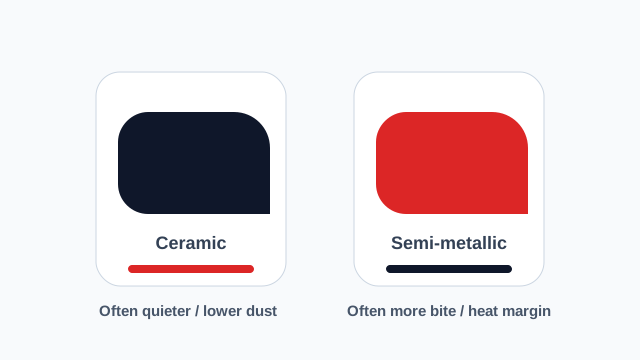
The Quick Take
Ceramic pads are usually the better fit for quiet daily driving and lower dust. Semi-metallic pads can make sense when heat handling and stronger bite are more important than wheel cleanliness or quietness.
When Ceramic Makes Sense
Choose ceramic pads when the vehicle is mostly a commuter, family car, or light-duty SUV and the owner values low dust, smooth stops, and predictable cold performance.
When Semi-Metallic Makes Sense
Consider semi-metallic pads for heavier vehicles, performance use, repeated heat, or towing scenarios where the pad line is explicitly positioned for that duty cycle.
Fitment Still Wins
The correct material is only useful if the part fits the exact vehicle. Confirm axle position, rotor condition, hardware, trim, drivetrain, and merchant part number before buying.
Keep reading
Common questions
Brake safety and fitment warning
Brake fitment varies by year, make, model, trim, drivetrain, rotor size, axle position, and sometimes production date. Use these recommendations to narrow the field, then confirm exact compatibility before ordering. If you are not comfortable installing brake components, have a qualified mechanic do the work.